Prague Astronomical Clock: 600 Years of History and One of the Most Beautiful Views of the Old Town
Did you know that Prague’s Astronomical Clock can tell several different types of time, that its skeleton figure sets the procession of the apostles in motion every hour, and that its history dates back to 1410? One of Prague’s most famous landmarks holds many fascinating secrets.
Prague’s Astronomical Clock: A 600-Year-Old Technical Masterpiece
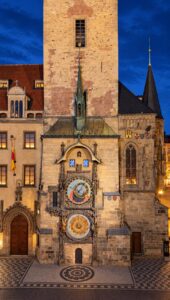
The Old Town Astronomical Clock is one of Prague’s most important historical landmarks. Installed on the Old Town Hall in 1410, it continues to fascinate visitors from all over the world. But it is much more than an ordinary clock. Its ingenious mechanism combines astronomy, mathematics, art and medieval clockmaking craftsmanship.
The clock consists of three main parts. At the top, you will find the moving figures of the apostles, in the middle the astronomical dial, and at the bottom the calendar dial.
Each has its own story to tell.
5 Fascinating Facts You May Not Know About Prague’s Astronomical Clock
1. The clock tells more than just the time
The astronomical dial is actually an ingenious astrolabe. It shows the positions of the Sun, Moon and stars and allows visitors to read several different types of time. These include Central European Time, Old Czech Time, Babylonian Time and sidereal time. There is much more to discover on this one dial than simply what time it is.
2. The skeleton reminds us of the passing of life every hour
One of the clock’s most distinctive figures is a skeleton holding a small bell. When the clock strikes the hour, it pulls a rope and nods its head, setting the procession of the twelve apostles in motion. They gradually appear in two small windows. At the end, a rooster crows and the clock strikes the hour.
3. Master Hanuš and the legend of his blinding
You may have heard the story of Master Hanuš, who was once believed to have created the Astronomical Clock. According to a famous legend, Prague’s councillors had him blinded so that he could never create a similar masterpiece for another city. The story goes that he later had himself led to the clock and damaged its mechanism. However, historical records attribute the original clock to clockmaker Mikuláš of Kadaň and astronomer Jan Šindel. Master Hanuš played an important role in its later modifications.
4. The famous calendar dial was painted by Josef Mánes
The lower part of the clock features a calendar dial decorated with allegorical representations of the months and zodiac signs. It was created by the renowned Czech painter Josef Mánes. The original 19th-century artwork is now housed in the Museum of the City of Prague, while a later replica can be seen at the Old Town Hall.
5. The Astronomical Clock was almost destroyed by fire
In May 1945, during the Prague Uprising, the Old Town Hall was severely damaged by fire. The Astronomical Clock lost its original figures of the apostles as well as part of its decoration. Following extensive restoration work, the clock was set in motion again in 1948. Thanks to these efforts, we can still admire it today.
The Best View of Prague’s Astronomical Clock? From the Windows of the Mozart Interactive Museum!
You can admire the Astronomical Clock directly from Old Town Square, but what if you could see it from a completely different perspective?
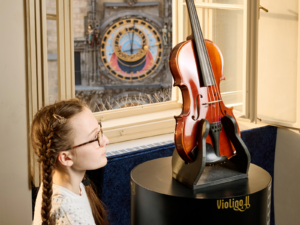
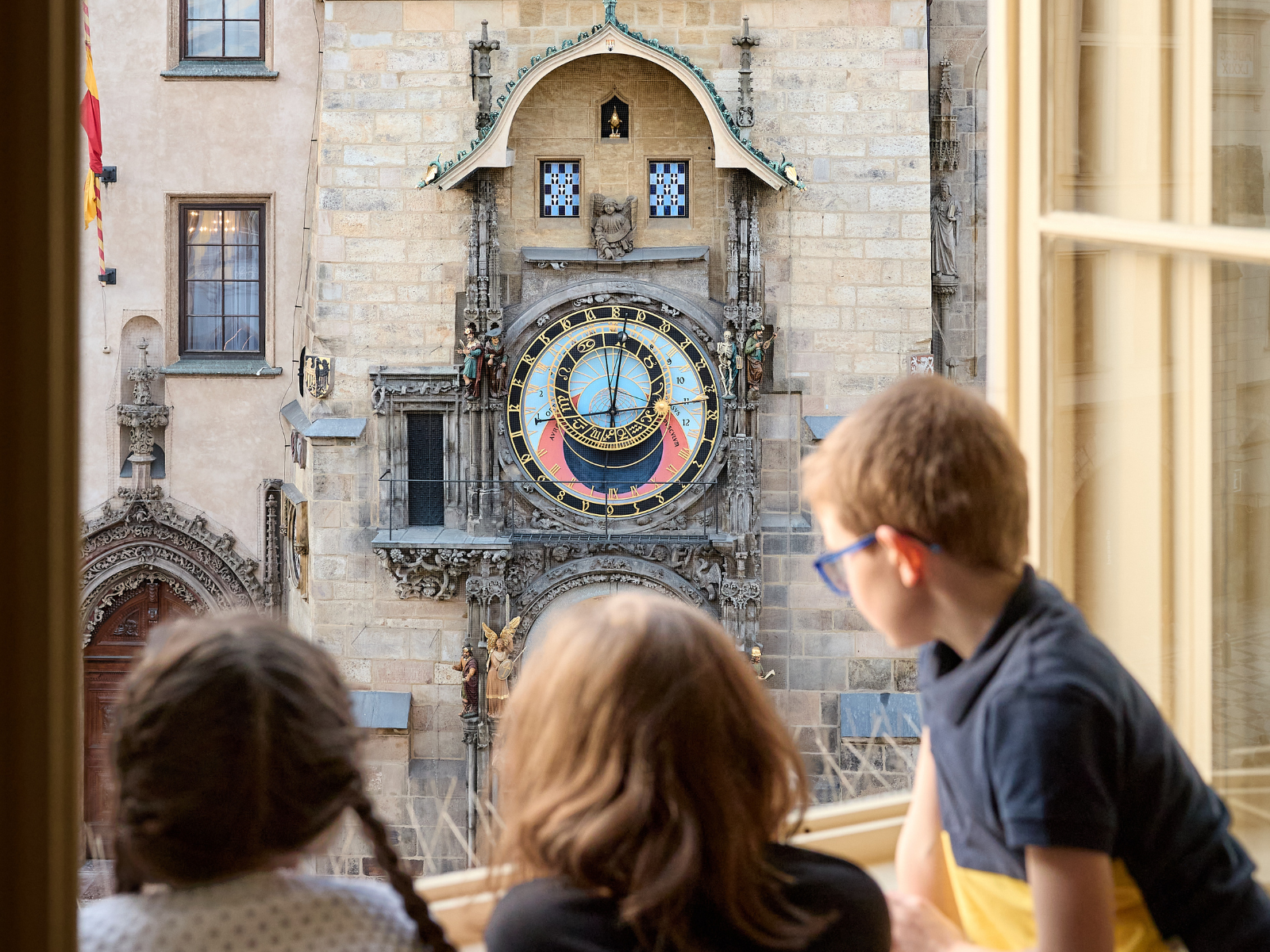
One of the most beautiful views of this iconic landmark awaits you through the windows of the Mozart Interactive Museum, located at Staroměstské náměstí 24, directly opposite the clock.
Imagine historic windows, panoramic views of Old Town Square and the famous Astronomical Clock just a few steps away. It is the perfect spot to take a memorable photo and capture a special moment from your visit to Prague.
You can now enjoy this unique view for just CZK 50.
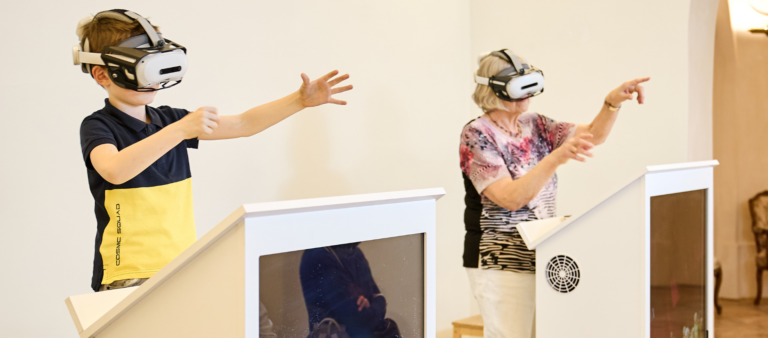
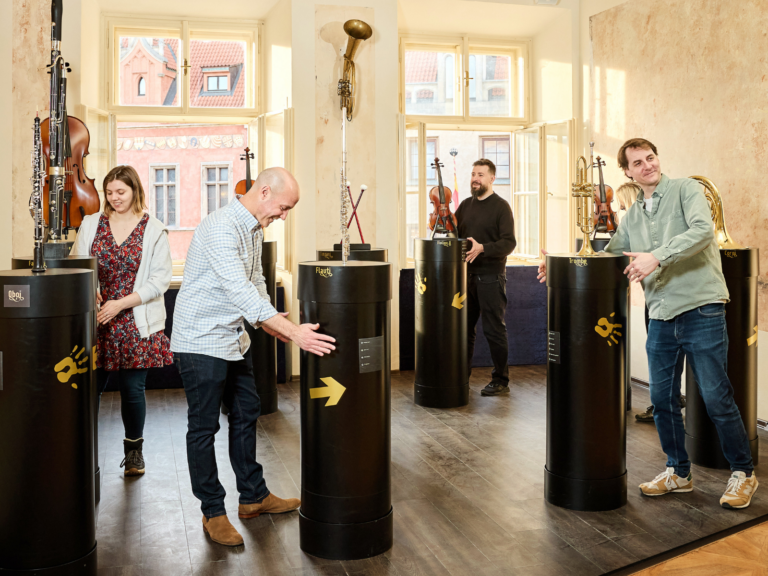
If you have a little more time, we highly recommend combining your visit to the viewing point with a tour of the Mozart Interactive Museum. Discover the world of music, explore interactive exhibits, experience virtual reality and even try your hand at conducting an orchestra.
Find us at Staroměstské náměstí 24, right opposite Prague’s Astronomical Clock.